
Why Public Murals Matter for Cities, Developers, and Public Spaces
Last Updated: 5/26/2026
Public murals can shape how people experience a city, business district, mixed-use development, or shared public space.
When planned with the site in mind, a mural can turn an ordinary surface into a landmark, a wayfinding cue, or a visual anchor for the surrounding area. It can help people understand where they are and why that place matters.
This guide looks at how public murals create value across walls, parking decks, crosswalks, stormwater infrastructure, utility boxes, trails, and other civic surfaces. Along the way, we’ll look at examples from Brianna Gardocki’s public mural work in Georgia, including parking deck murals in Woodstock and public art connected to Atlanta’s growing mural scene.


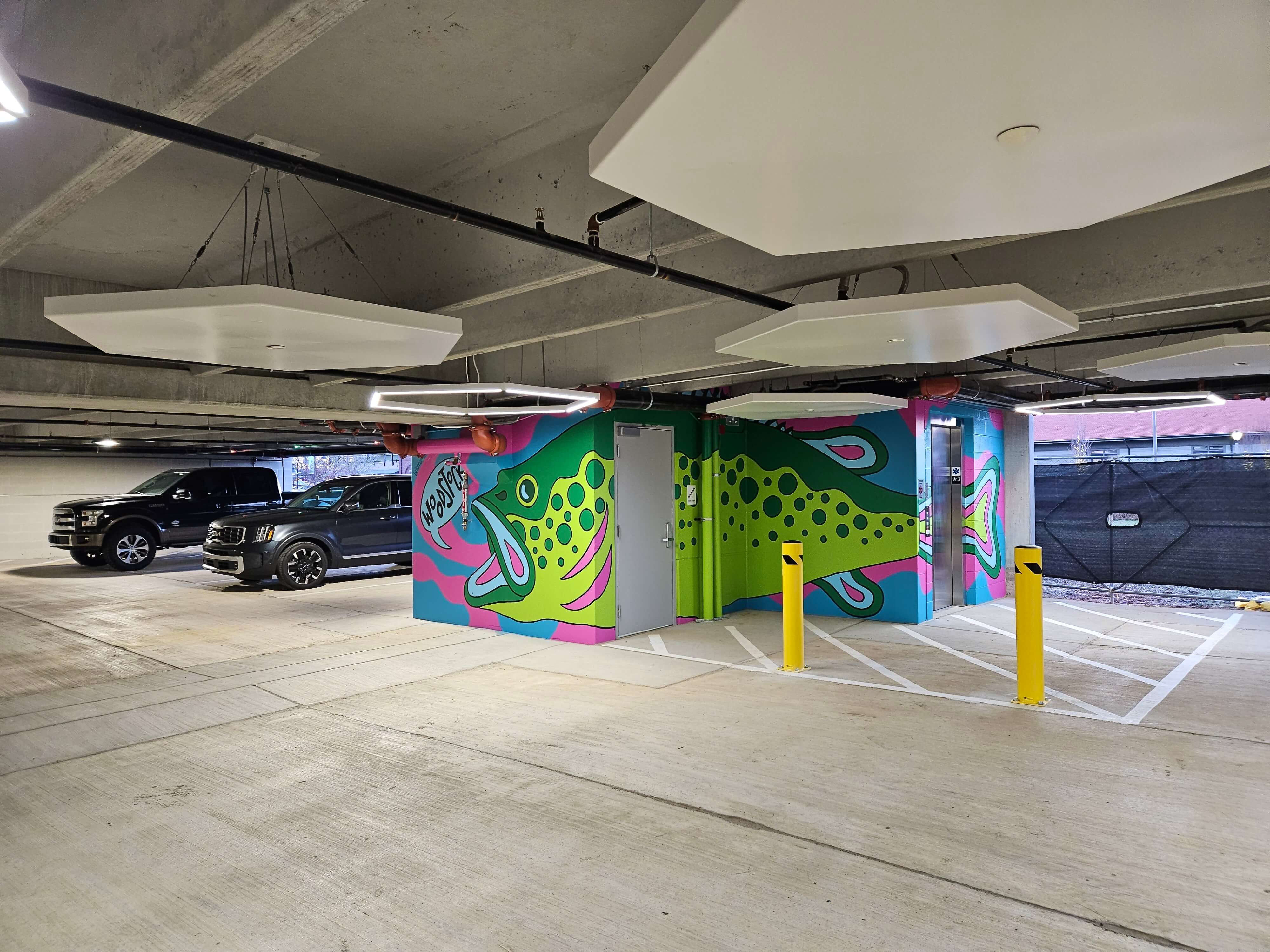
Nobody visits a city for its parking decks.
But parking decks often sit near the places people are actually trying to reach: downtown businesses, restaurants, parks, event spaces, trails, and mixed-use developments.
Because of that, they can have a major effect on the arrival experience.
A well-planned parking deck mural can turn a plain structure into a recognizable part of the district. It can also help with wayfinding, draw attention to nearby destinations, and make a large piece of infrastructure feel less disconnected from the place around it.
Woodstock, GA offers a clear example.
As part of the City Center East Parking Deck project, the city used public art to bring character and visibility to a large downtown structure. The deck includes multiple murals by different artists, each contributing to the site’s overall sense of place.
Brianna Gardocki created two murals for the project: one inspired by Woodstock’s connection to outdoor recreation and fishing, and another centered on local agriculture, fresh produce, and the city’s farmers market.
.jpg)
Those concepts work because they are specific to Woodstock. The bass mural connects the parking deck to outdoor recreation, while the farmers market mural ties the structure to local agriculture, small businesses, and community gathering. Instead of treating the deck as separate from the downtown experience, the murals help it feel like part of the city’s public environment.
The larger lesson is simple: useful mural opportunities are often tied to places people already use.
A parking deck near shops, restaurants, trails, events, or public gathering spaces has more potential than an isolated wall with little public interaction. The site already has traffic, visibility, and a practical role in the district. A mural can build on that existing use instead of forcing interest onto an isolated surface.
Before planning a public mural, it helps to ask:
The same principle applies beyond parking decks. Downtown corridors, crosswalks, utility boxes, parks, commercial districts, trails, and mixed-use developments can all become better candidates for public art when artwork is planned around how people already move through the area.
For public art buyers, the opportunity starts with identifying the surfaces people already notice, pass, gather near, or use as reference points. Those are often the places where a mural can have the clearest impact.
In the next chapter, we’ll look at how public murals can support business districts, tourism, and long-term economic development.

Revitalization is usually measured through physical change: streets feel safer, storefronts become more active, infrastructure improves, and more people spend time in the area.
Murals can help people register that change.
A blank wall or overlooked piece of infrastructure can make a place feel unfinished, even when investment is happening around it. A well-planned mural gives that space a clear marker. It can signal that the area is cared for and that the site belongs in the city’s public life.
Public art works best alongside other improvements. The effect is greater in areas where people already walk, gather, shop, commute, or attend events.
In that setting, murals help make change more tangible.
Atlanta offers a current example of public art being used during a major civic moment.
As the city prepares for FIFA World Cup 2026, murals are becoming part of how Atlanta presents itself through neighborhood spaces, infrastructure, and street-level experience.
One visible example is Wild Seed, Wild Flower, a South Downtown mural by Atlanta-based artist Charity Hamidullah, created with Living Walls and Atlanta’s Office of Cultural Affairs. The City of Atlanta announced the mural dedication ahead of the 2026 FIFA World Cup, and Atlanta’s Office of Cultural Affairs described the project as part of the city’s Bridges, Tunnels, and Walls program, which turns public infrastructure into sites for creative expression.
The project shows how murals can shape the experience of Atlanta’s shared spaces for residents and visitors.
Brianna Gardocki recently completed a South Downtown mural with Living Walls during this same period of expanded mural activity in Atlanta. As more projects are completed and publicly documented, Atlanta’s mural activity shows how major civic moments can create traction while still relying on artwork that feels rooted in the city itself.
.jpg)
That local connection matters. Even as Atlanta prepares for global attention, these projects are shaped by artists with a direct relationship to the city’s visual culture and public spaces.
Large civic moments can bring new attention to a place, but the artwork still needs to connect with the communities that give the city its identity.
Citywide mural projects are rarely built around one artist working in isolation.
A lead artist may shape the final vision, but large public artworks usually rely on a wider production network. Arts organizations, assisting artists, city staff, property owners, photographers, and site coordinators can all play a role.
.jpg)
That collaborative structure is clear in Atlanta’s current mural activity. Artists are creating their own work while helping other projects move from concept to finished wall.
A public mural has to function inside a real project environment. The artist needs to understand the site, the schedule, the partners involved, and the larger reason the work is being commissioned.
That kind of experience is especially valuable when public art is tied to a major event, downtown improvement effort, mixed-use development, trail corridor, or citywide arts initiative.
Atlanta’s current public art activity offers a practical example for cities beyond Georgia.
When a city is preparing for more visitors or renewed public attention, murals can help shape what people see at street level.
The best opportunities are usually places already tied to daily movement, such as parking decks, trail corridors, transit areas, commercial streets, bridges, and tunnels.
A mural may be a good fit when a city wants to:
In that context, murals can make revitalization easier to recognize without overstating their role. They help people pay attention to places that are already becoming more important to the city’s future.
Have a wall, corridor, or public space in mind?
Brianna can help turn public-facing surfaces into site-specific mural projects.

A useful mural concept usually begins with what people already know about a place.
That may include natural features, architecture, longtime businesses, public events, neighborhood traditions, or the daily rhythms of the community.
For Woodstock, Brianna’s parking deck murals drew from two familiar parts of the city’s character: outdoor recreation and the farmers market. The bass mural points to the area’s fishing culture, while the farmers market mural uses produce, honey, and agricultural imagery tied to local commerce and community gathering.
.jpg)
Those choices give the artwork a specific relationship to Woodstock. The same imagery would not carry the same meaning in every city, which is exactly why the concept works.
A local theme still has to work visually.
The best public mural concepts translate research and community context into imagery people can understand quickly. The artwork does not have to be simple, but the main idea should read clearly from the way people actually encounter it.
For a large public wall, large shapes and a clear focal point matter. Color, contrast, and smaller details can add depth, but the mural should still hold together from a distance.
This is where an artist’s style becomes part of the strategy. Brianna’s bold linework and bright, character-driven compositions help make local themes feel energetic and approachable while staying clear at scale.
.png)
Public places often become memorable through visual shorthand.
A historic building, a fountain, a bridge, a mill, a sculpture, or a painted wall can become part of a place’s identity over time.
Murals can work the same way. When the concept is specific enough, the artwork can become a recognizable feature of the district.
This is where public art can help shape identity. A mural gives people a shared visual reference. If the work resonates, the community decides what meaning it carries over time.
A public mural has to hold up beyond the first reveal.
Trends, slogans, and overly narrow references can age quickly. A more durable concept usually has enough specificity to feel local while remaining understandable years later.
For city-led projects, that balance is important. The mural becomes part of a shared environment, seen by residents, visitors, business owners, and people who may know nothing about the original commission.
That is why durable concepts often come from deeper local themes: landscape, history, ecology, neighborhood character, community gathering, or everyday life in the area.
A clear mural concept gives the artwork a foundation before the design is finalized.
When the imagery comes from real local context and translates well at public scale, the mural has a better chance of becoming part of the area’s identity.
Over time, that visual reference can help define a district, downtown, business corridor, or public destination. From there, the conversation shifts from concept strategy to long-term impact.


People do not usually photograph a mural because they are trying to promote a city or business.
They photograph it because it marks an experience.
A mural can become the backdrop for a trip, a downtown walk, a first visit to a neighborhood, or a night out with friends. It gives people a visual way to say, “I was here.”

For cities and public art programs, that behavior can shape how the mural is planned before installation. Site approach, stopping points, and photo opportunities all affect how easily people interact with the artwork.
That is why public murals often keep circulating after installation. Someone stops for a photo, tags the location, or mentions the artwork when talking about their visit.
Over time, those small interactions can make a mural part of the area’s everyday activity.
Public engagement does not have to wait until the mural is complete.
Progress photos, artist interviews, ribbon cuttings, city posts, and local press all give people a way to follow the project as it develops.
Clear communication helps residents see the mural take shape before the final reveal. City staff, arts organizations, property owners, artists, and local partners can each help introduce the project from their own perspective.
That shared visibility gives the project context before the wall is finished. By the time the mural is complete, a public story has already started forming around it.
A mural gives city staff, tourism partners, and public art programs something concrete to build into the visitor experience.
It can appear in public art maps, walking routes, downtown guides, tourism pages, event promotions, and posts from city departments or local partners.
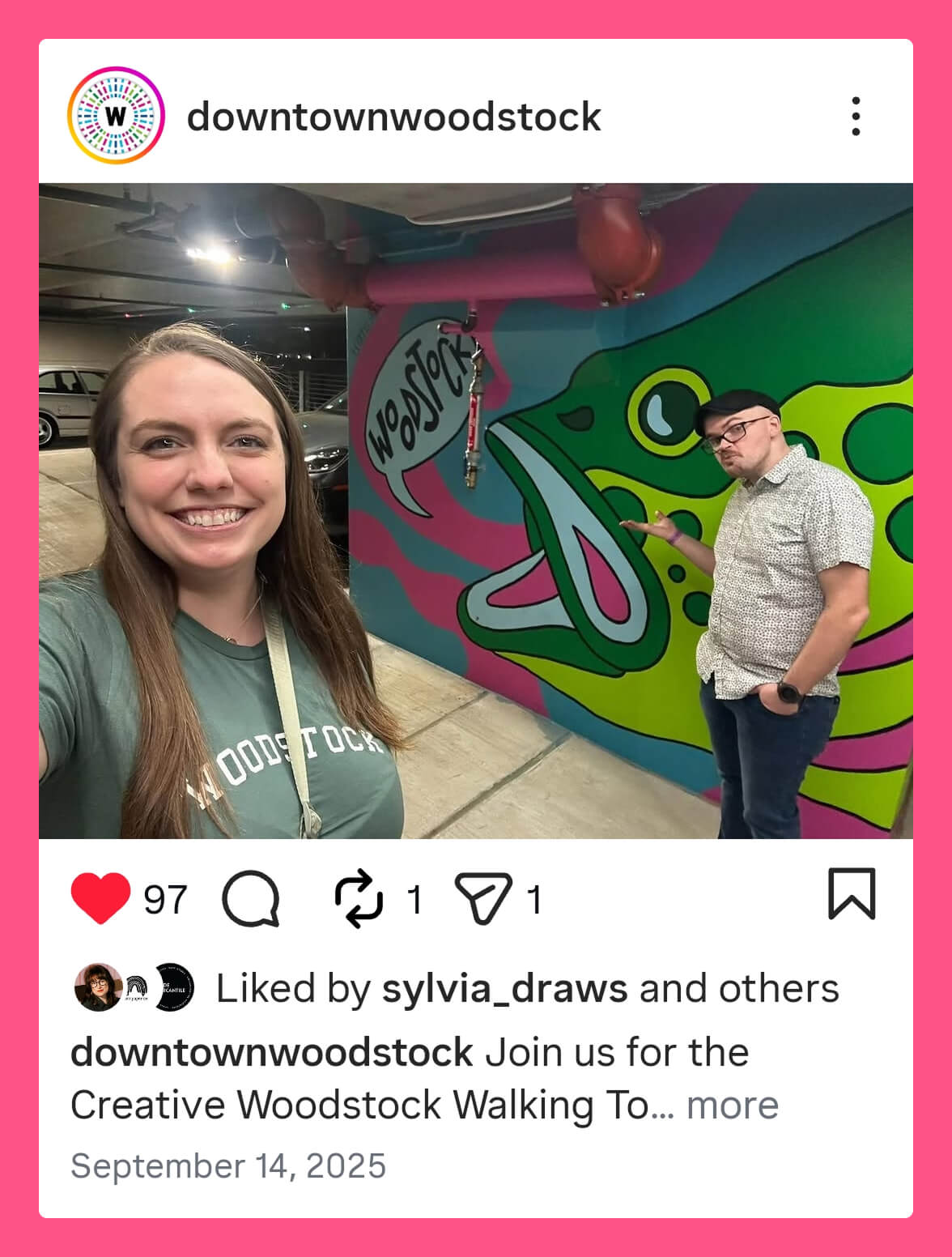
This is especially useful when a city has multiple public artworks. One mural can become a landmark. Several murals can give people a path through the area and a reason to explore beyond a single wall.
That kind of engagement works best when the mural is easy to find, easy to photograph, and close to nearby destinations. A mural near restaurants, shops, parks, trails, or public gathering spaces gives people a reason to keep moving through the district instead of stopping at a single wall.
Nearby businesses can build on the attention a mural already creates.
Often, the simplest uses are the most natural. A business can reference the mural in directions, repost visitor photos, use the artwork as a backdrop for event posts, or participate in a public art walk.
A café near a mural can point customers toward it. A shop can repost photos from visitors. A restaurant can tie an unveiling or art walk into a downtown event.
A mural near restaurants, shops, markets, or event spaces can create more value when nearby businesses know how to reference and share it.
The mural gives people another reason to stop in the area. Nearby businesses can help turn that attention into a fuller experience.
Brianna’s Woodstock murals work well for public engagement because they are easy to identify and specific to the city.
The bass mural connects to Woodstock’s outdoor recreation culture. The farmers market mural uses produce, honey, and agricultural imagery tied to local commerce and community gathering.
Both murals give visitors something clear to photograph. They stand out visually, but they also make sense in Woodstock.
The artwork catches attention while still reinforcing where people are.
A mural’s public life depends on how people use it.
When residents, visitors, businesses, city departments, and arts partners all have ways to engage with the work, the mural can stay active long after installation.
Ongoing activity is part of what makes public murals valuable for placemaking. The mural becomes something people encounter in person and associate with the place itself.

A ribbon cutting or unveiling can bring attention to a mural, but the project continues after that first moment.
After installation, the mural may need maintenance guidance, updated photography, image-use records, or a point of contact if the wall is damaged. Those practical details are easier to manage when aftercare is discussed before the wall is painted.
Aftercare helps protect the project over time. A mural should have a clear path for basic care, future touch-ups, and communication if the wall is damaged or the property changes hands.
Those decisions are easier to make while the project team is already aligned, before the original context gets harder to recover.
Public murals exist in real conditions.
They face weather, sunlight, construction activity, foot traffic, and the possibility of tagging or vandalism. That does not make murals risky. It means they should be planned with public use in mind.
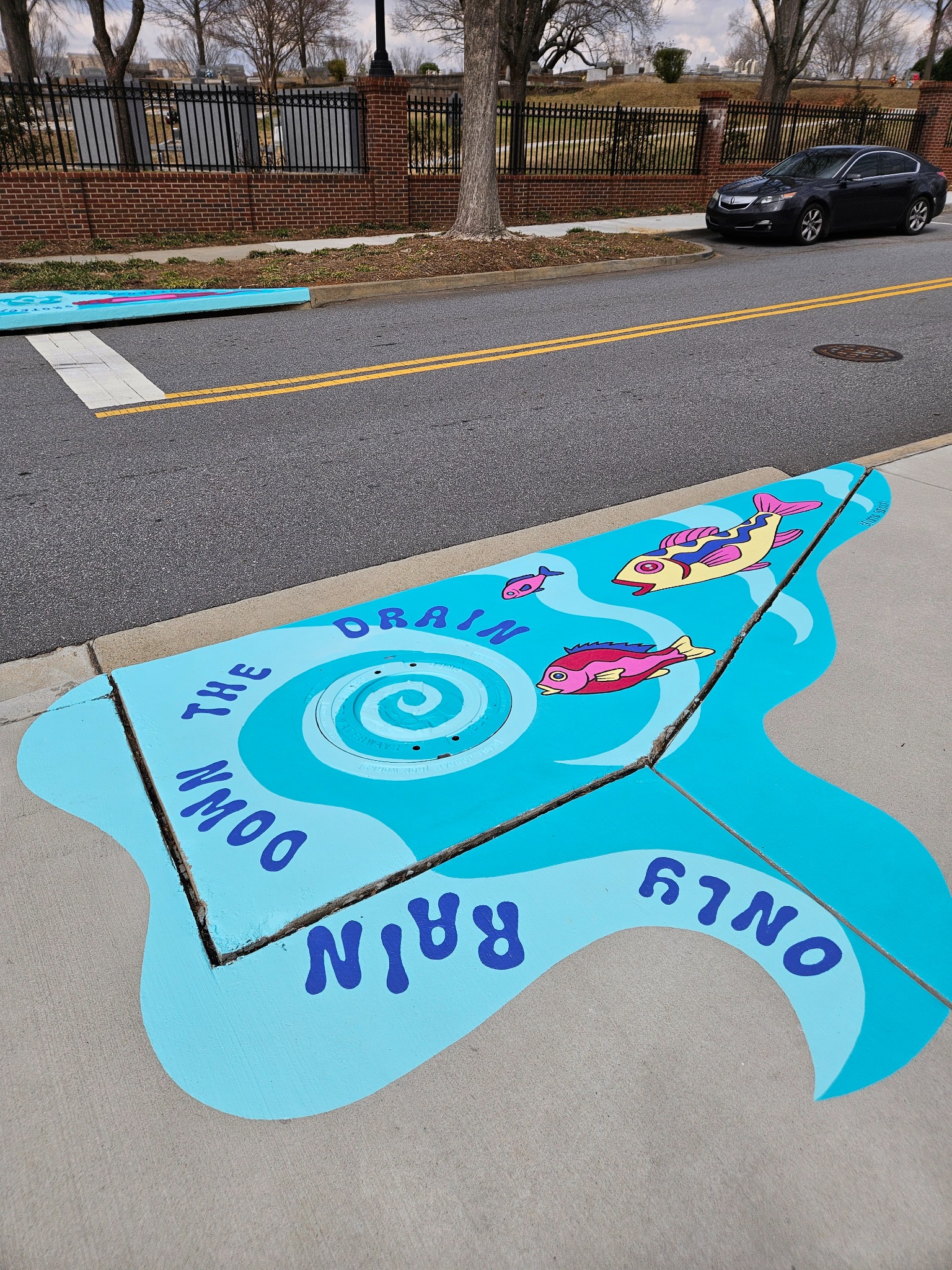
Protective coatings can be part of that plan, especially for murals in high-traffic areas. In some locations, anti-graffiti coating may help make future cleanup easier and reduce lasting damage.
The goal is to make the artwork easier to care for as public conditions change. A mural that stays clean and well-maintained is more likely to remain part of the surrounding area.
Long-term care works best when the responsible parties are clear.
For a mural on public infrastructure, maintenance may involve a city department, public art program, property manager, or contracted partner. For a privately owned wall, responsibility usually sits with the property owner, project sponsor, or business connected to the site.
The important part is alignment before the mural is complete.
Everyone involved should understand who handles routine care, who responds if repairs are needed, whether the artist may be contacted for touch-ups, and how the finished artwork can be photographed or promoted.
This kind of clarity protects the mural once the launch attention fades.
It also helps public art programs maintain trust. When a mural is cared for properly, residents and visitors can see that the work was meant to last.
Good project documentation helps the mural remain useful after installation.
That does not need to be overly complicated. At minimum, it helps to keep final photos, artist information, project partners, completion date, location, dimensions, material notes, maintenance guidance, and approved image usage in one place.
Those records can support touch-ups, public art maps, press requests, tourism materials, grant reporting, and project recaps.
.jpg)
They also help keep the story of the mural attached to the artwork. Years later, people should still be able to learn who made it, what inspired it, and how it connects to the place around it.
A mural’s long-term usefulness depends on follow-through after the reveal.
Care, clear responsibility, and basic documentation help the artwork stay presentable as the site changes and new people encounter the space.
That follow-through also reflects well on the city, business, developer, or arts organization behind the project. When a mural is cared for, people can tell the work was treated as part of the place rather than a temporary visual upgrade.
The mural itself is only the starting point. Its continued role depends on the people and systems that help it remain cared for over time.

A public mural project may start with a fully defined site, or it may begin with a broader public art opportunity.
For some projects, the wall or surface is already selected. The city, developer, arts organization, or business may already have photos, dimensions, a timeline, an installation window, and a general sense of what the artwork should support. In that case, the artist can focus on interpreting the site and developing a concept that fits the project’s goals.
Other projects start earlier. A city may know it wants artwork along a corridor, in a parking deck, near a park, around stormwater infrastructure, or within a commercial area, but still need help identifying which surfaces have the most potential. That stage benefits from an artist who can think through visibility, scale, access, surrounding context, and how the artwork will function once it is in public.
From there, the opportunity needs to become a creative scope. The scope may include site photos, approximate dimensions, budget range, audience, nearby destinations, relevant local themes, community input, surface limitations, access needs, and the intended public outcome.
Without those pieces, even a good concept can become harder to execute.
Mural budgeting can be difficult when the project is still taking shape.
A city may have grant funding already approved. A business may have a fixed budget. A developer may be trying to understand what level of artwork is realistic for a specific wall, timeline, or site condition.
Budget conversations are most useful before the scope is locked in. The artist can help translate the available funding into a realistic plan: the size of the mural, the level of design detail, the production approach, the materials, the installation needs, and the amount of support required to complete the work well.
For public murals, the budget may include concept development, design revisions, materials, equipment, surface preparation, assistants, insurance requirements, protective coating, documentation, and coordination with project partners.
Two murals with similar dimensions can still require very different budgets. Access, wall condition, detail level, timeline, equipment needs, and project coordination can all affect the final scope.
This is especially useful when comparing proposals. A lower price may not include the same level of design development, production support, materials, equipment, or coordination. A higher price may reflect a more complex site, a tighter timeline, or a mural that requires more planning before painting begins.
A defined budget helps the artist recommend an approach that fits the project. It also helps the client understand what level of finish, support, and complexity is realistic for the available funding.
Brianna’s guide to how much a mural costs in Atlanta breaks down how wall size, design complexity, materials, equipment, and site conditions can affect pricing.
The right mural artist can help strengthen the project before the design is finalized.
For public work, that value often comes from knowing how to interpret a site, translate broad goals into visual direction, and develop artwork that can hold up at scale. The artist is also thinking about how the mural will read from the street, how the imagery connects to the surrounding area, and how the finished piece will be experienced by residents, visitors, and project partners.
That kind of judgment is especially useful when a project includes public input, multiple stakeholders, or a site with real logistical constraints.
A strong portfolio shows artistic ability. Public mural experience shows that an artist can pair that ability with communication, planning, feedback, and execution in a shared environment.
That combination can make the difference between a mural that looks good in a proposal and a mural that works once it is installed.
Brianna’s guide on how to hire a mural artist in Atlanta covers what to look for when comparing artists, portfolios, and project fit.
Good collaboration gives the project momentum.
For a mural, that often means having a clear point of contact, a realistic review schedule, and shared expectations around feedback. It also helps when site access, wall preparation, materials, documentation, and public engagement are addressed before they become sources of friction.
.jpg)
The process does not need to be rigid. It needs enough structure for the artist and project partners to keep moving while still leaving room for creative development.
An experienced muralist can respond to project goals, listen to community input, and shape the final concept into artwork that feels cohesive.
A collaborative process should make the mural easier to complete, not heavier.
A public mural can start building attention before the final wall is complete.
Progress photos, artist features, city posts, local press, unveiling events, and final photography can help people understand the project as it develops. These moments give residents and visitors a way to follow the work before they see the finished mural in person.
They also create more opportunities to tell the story of the project. The mural can be introduced through the artist’s perspective, the site’s history, the project’s public goals, or the partners who helped make it possible.
That visibility helps the mural feel like something people have watched come together, rather than something they discover only after the scaffolding is gone.
A mural project usually depends on a defined opportunity, a realistic budget, the right artist, organized communication, and a plan for how the finished work will be introduced and cared for.
Planning is not about making the process more complicated. It gives the mural a better chance to become part of how people use and understand the place.
Public murals work best when they are planned for the place they will live.
Site choice, concept, budget, and artist fit all shape how the finished mural functions in public. A mural may support wayfinding, strengthen a district’s identity, or give a shared space a clearer visual presence.
From there, the next step is turning the opportunity into a workable project: choosing the site, clarifying the goals, setting the budget, and bringing in an artist who understands how public artwork functions in the real world.
Brianna Gardocki creates bold, site-specific murals for cities, businesses, developers, and public art partners. Her work combines bright visual storytelling with practical experience in large-scale murals, public engagement, and place-based design.
Planning a mural for a public space, commercial district, mixed-use development, or community project?


